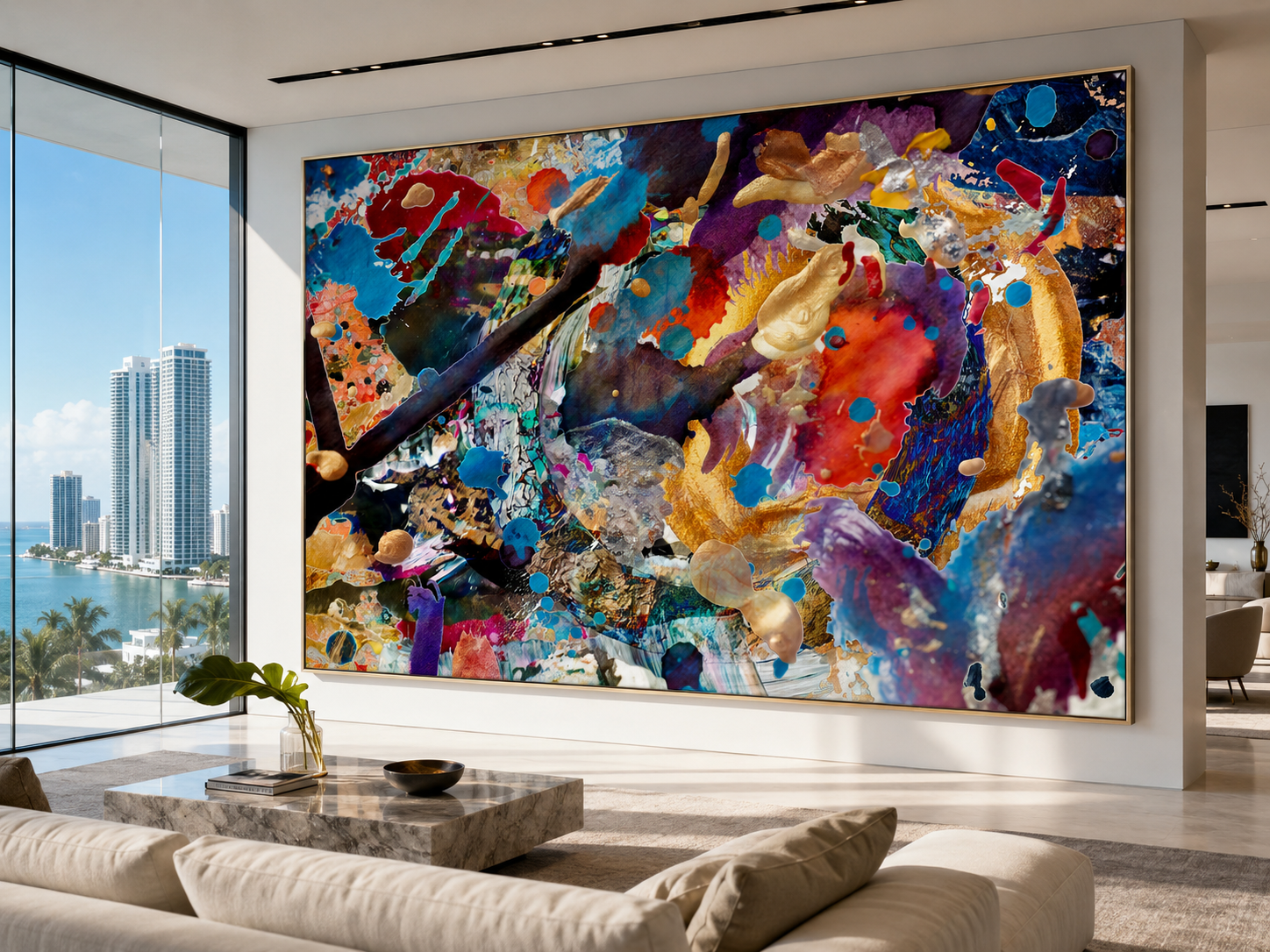
Hyperobjects
Some works do not explain themselves from one angle.
They arrive as fragments: surface, pressure, shadow, signal, matter, movement. The Hyperobjects series begins there.
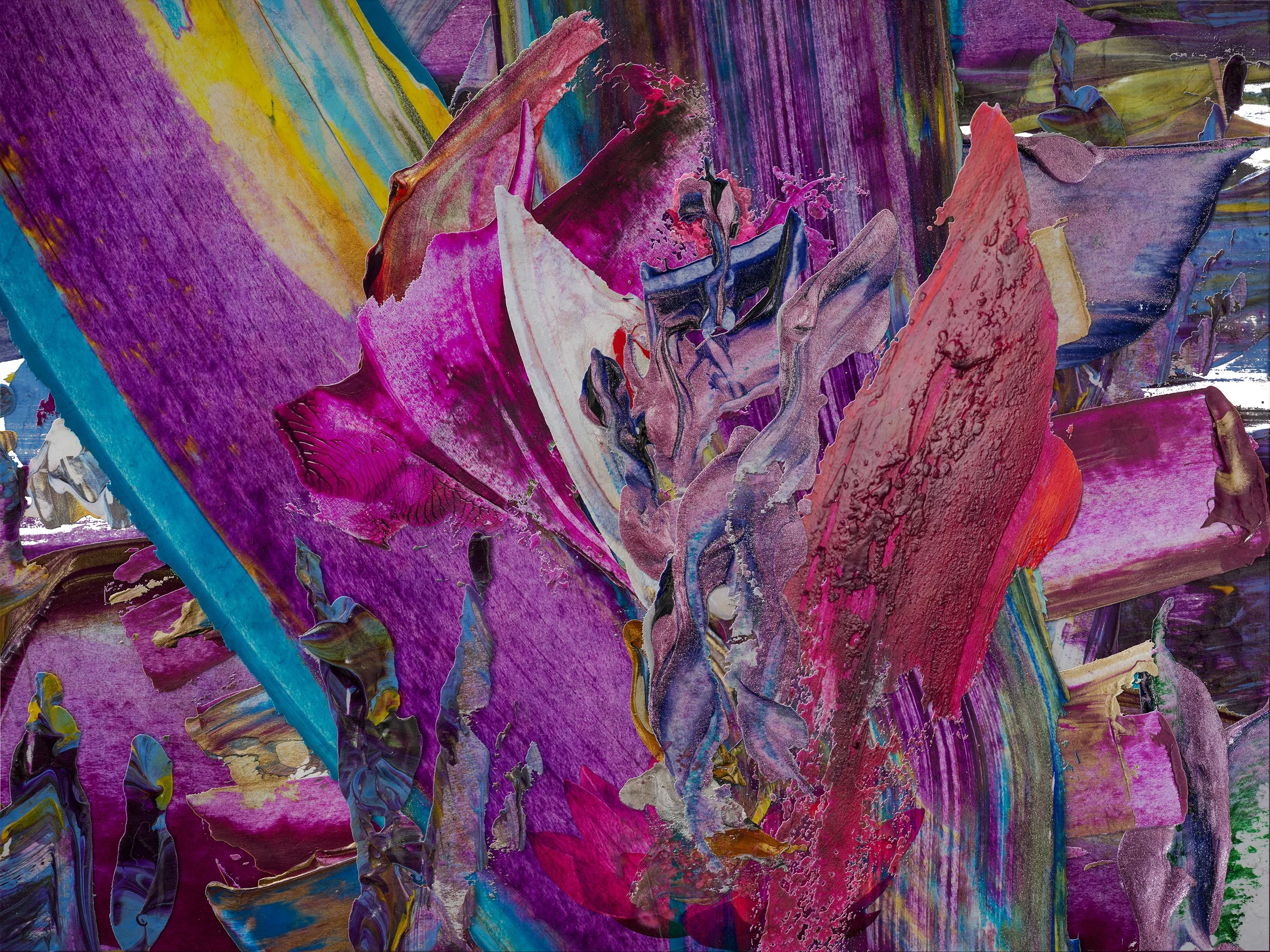
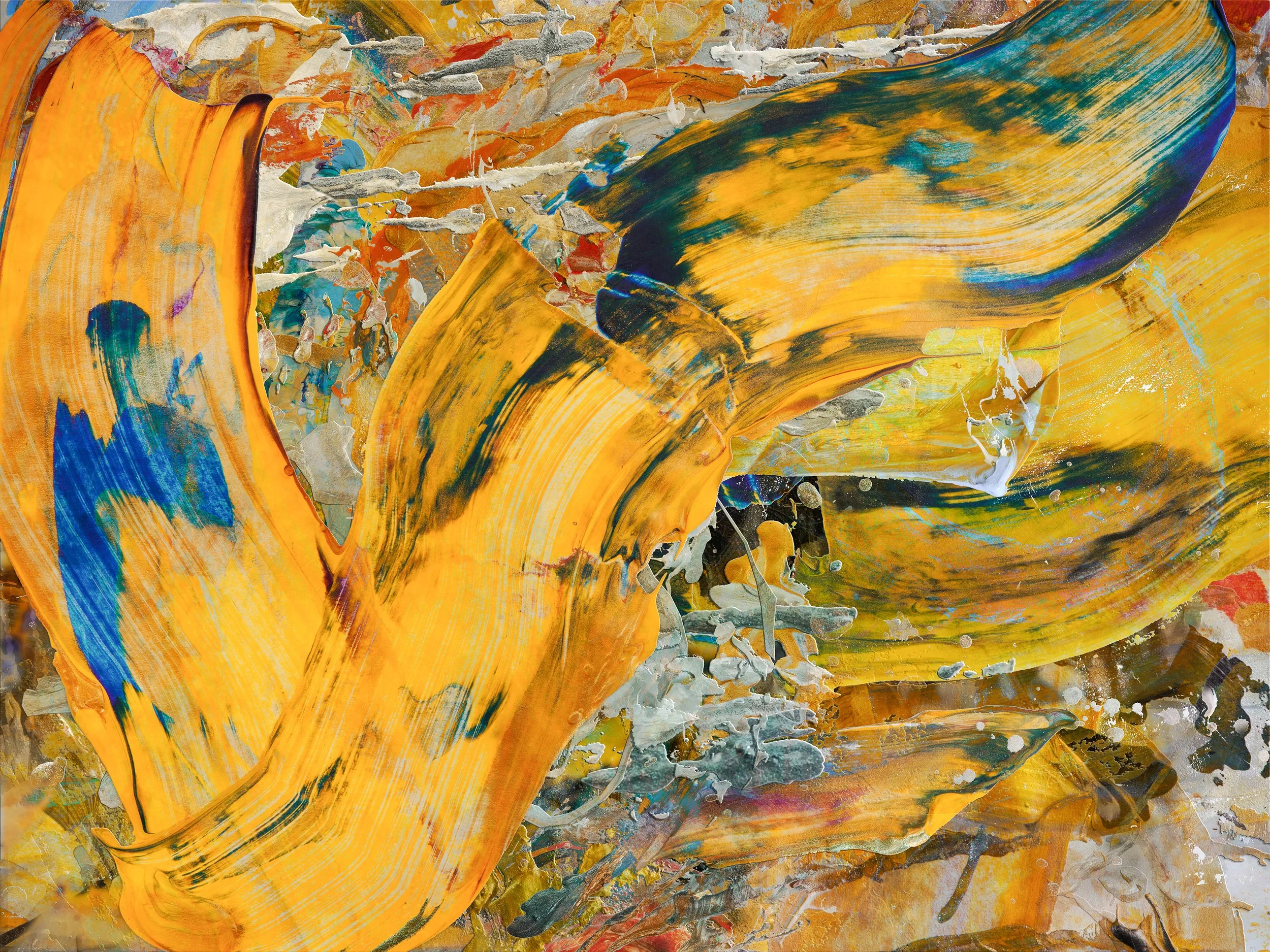
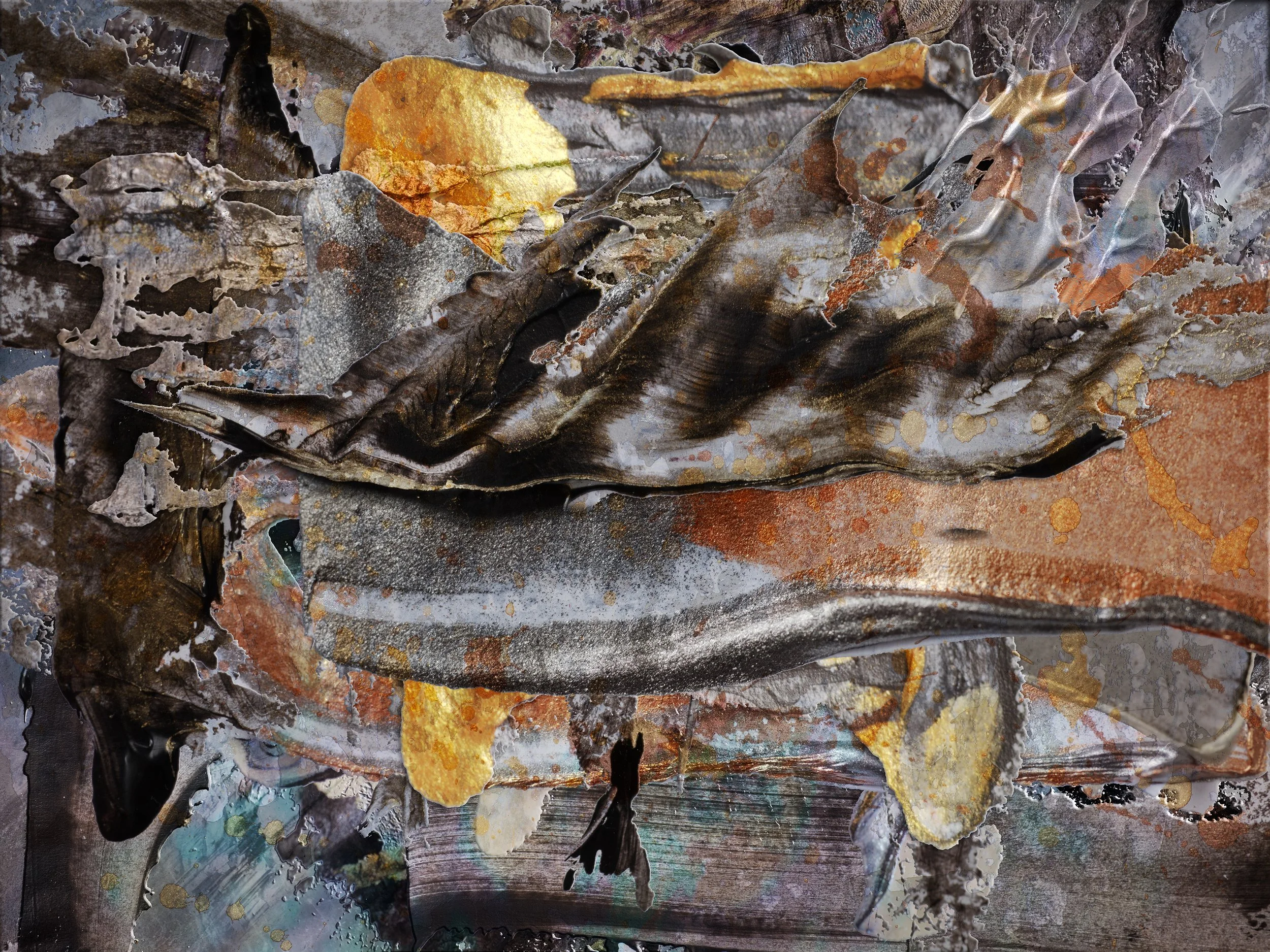
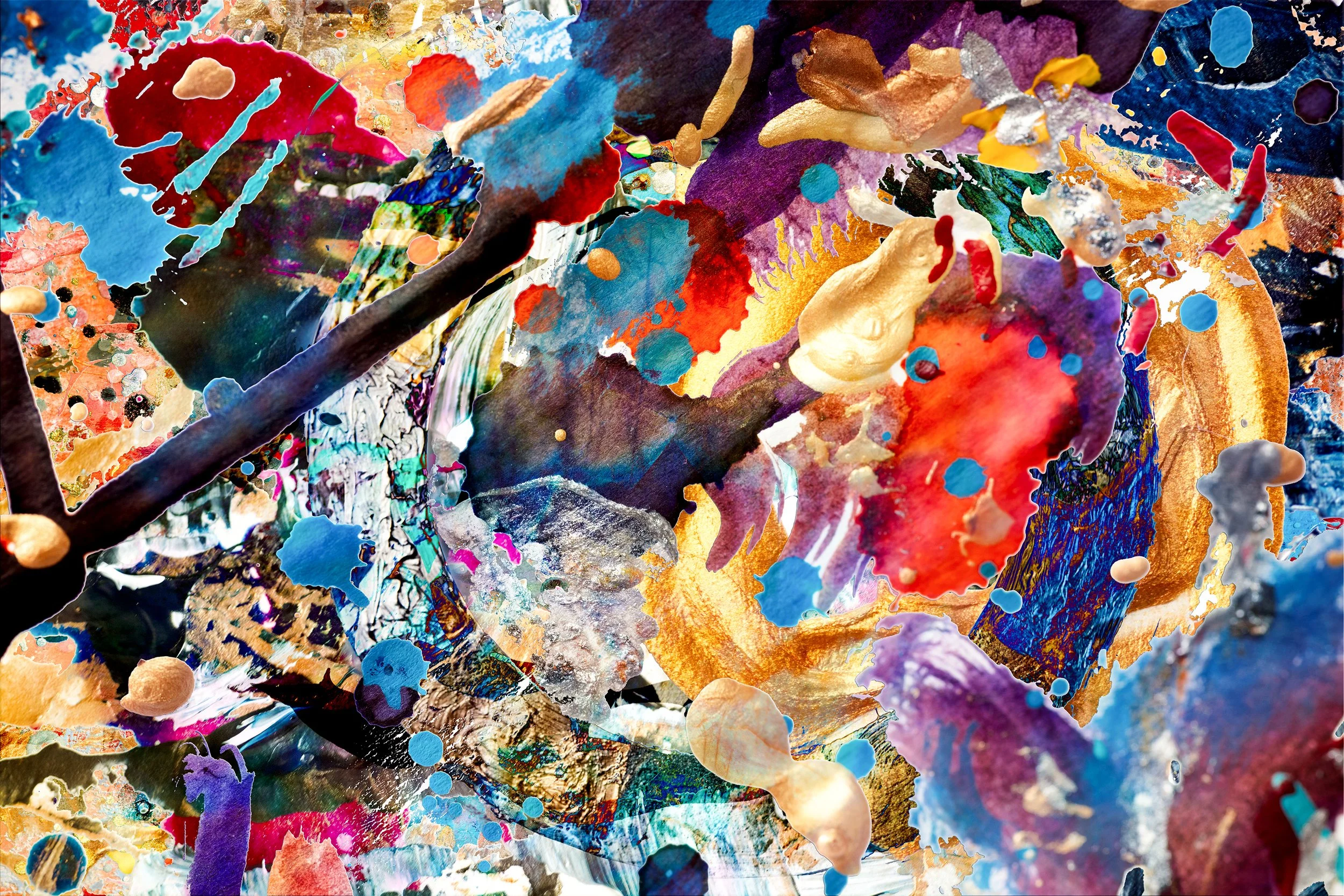
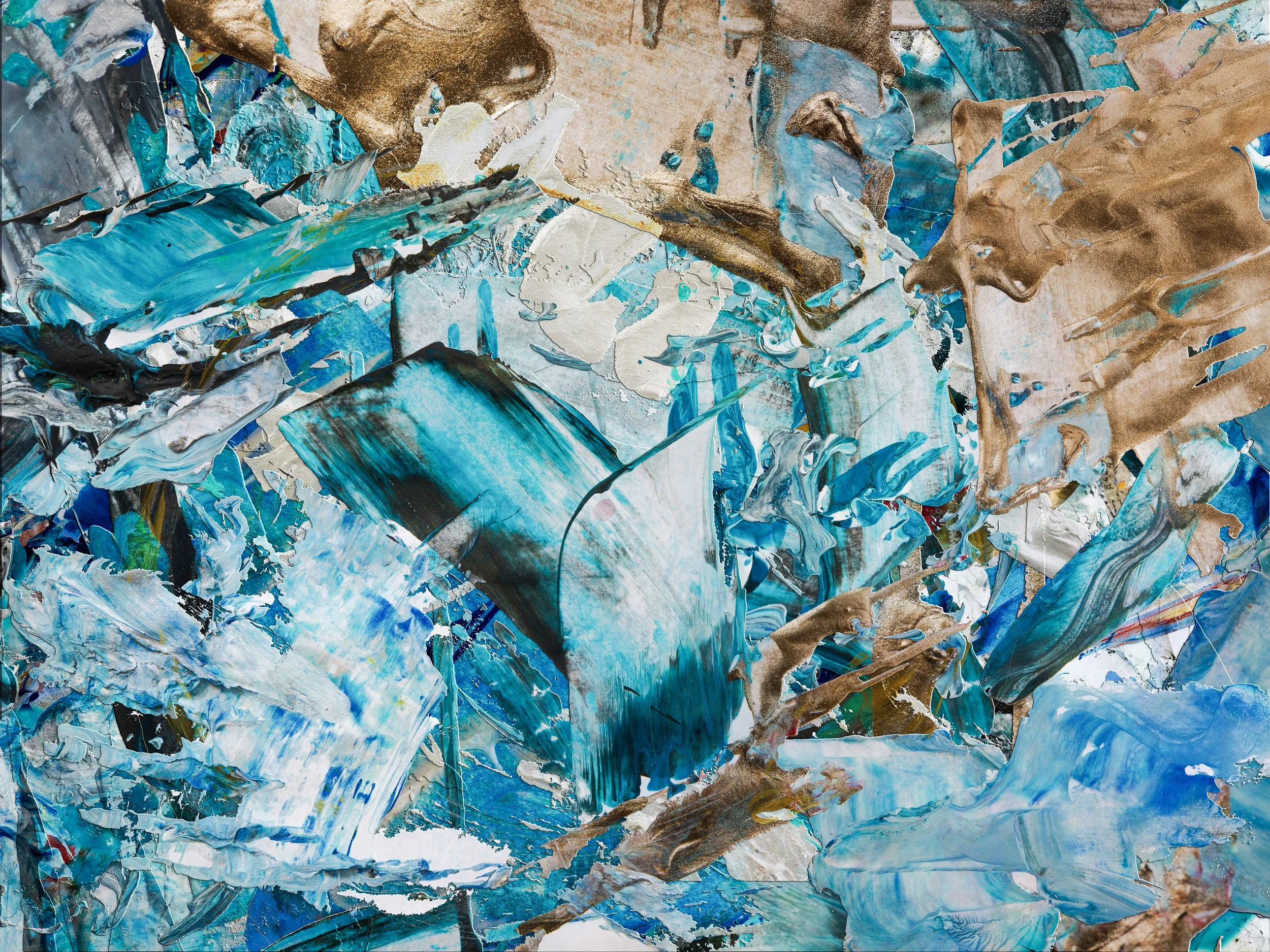
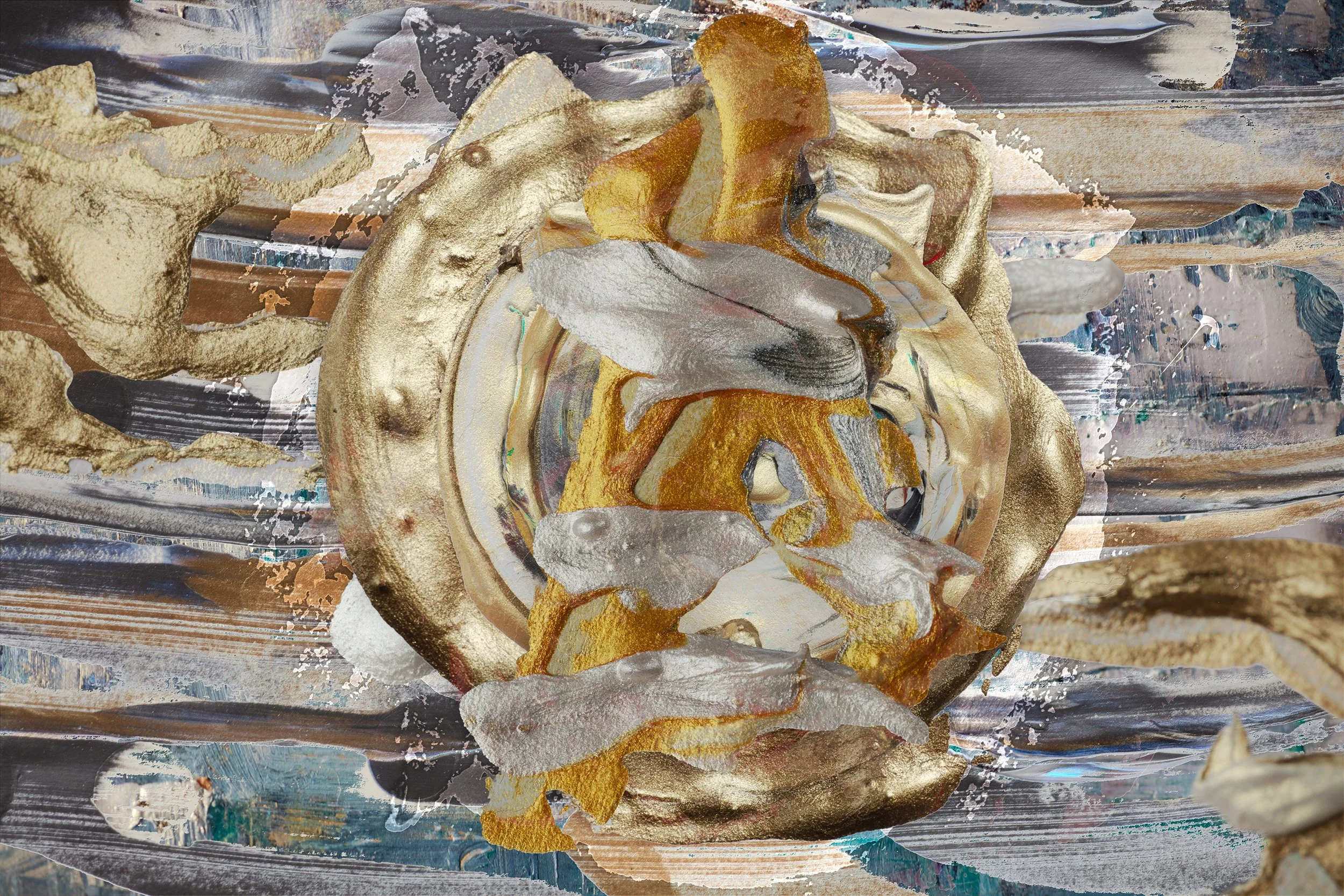
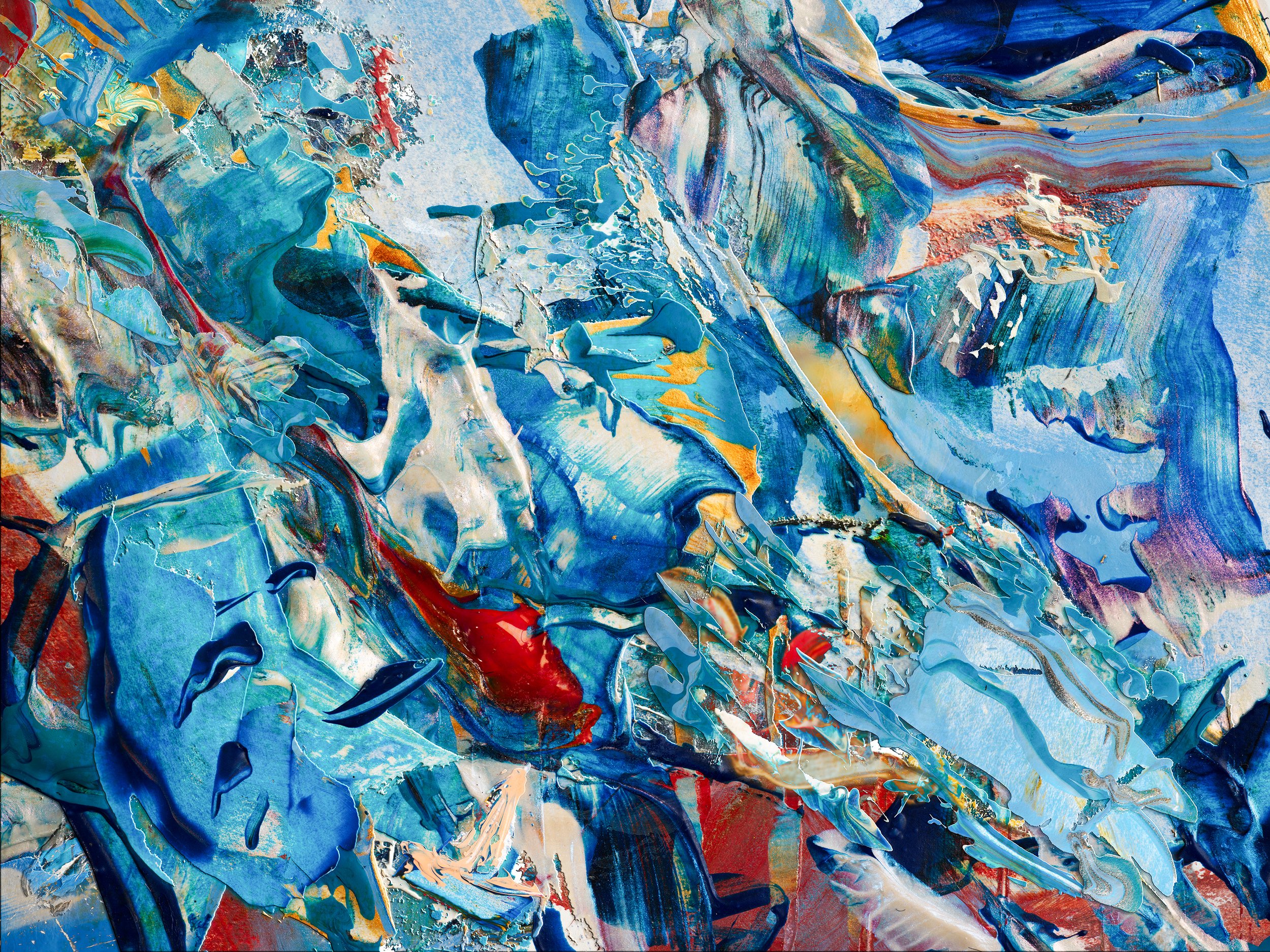
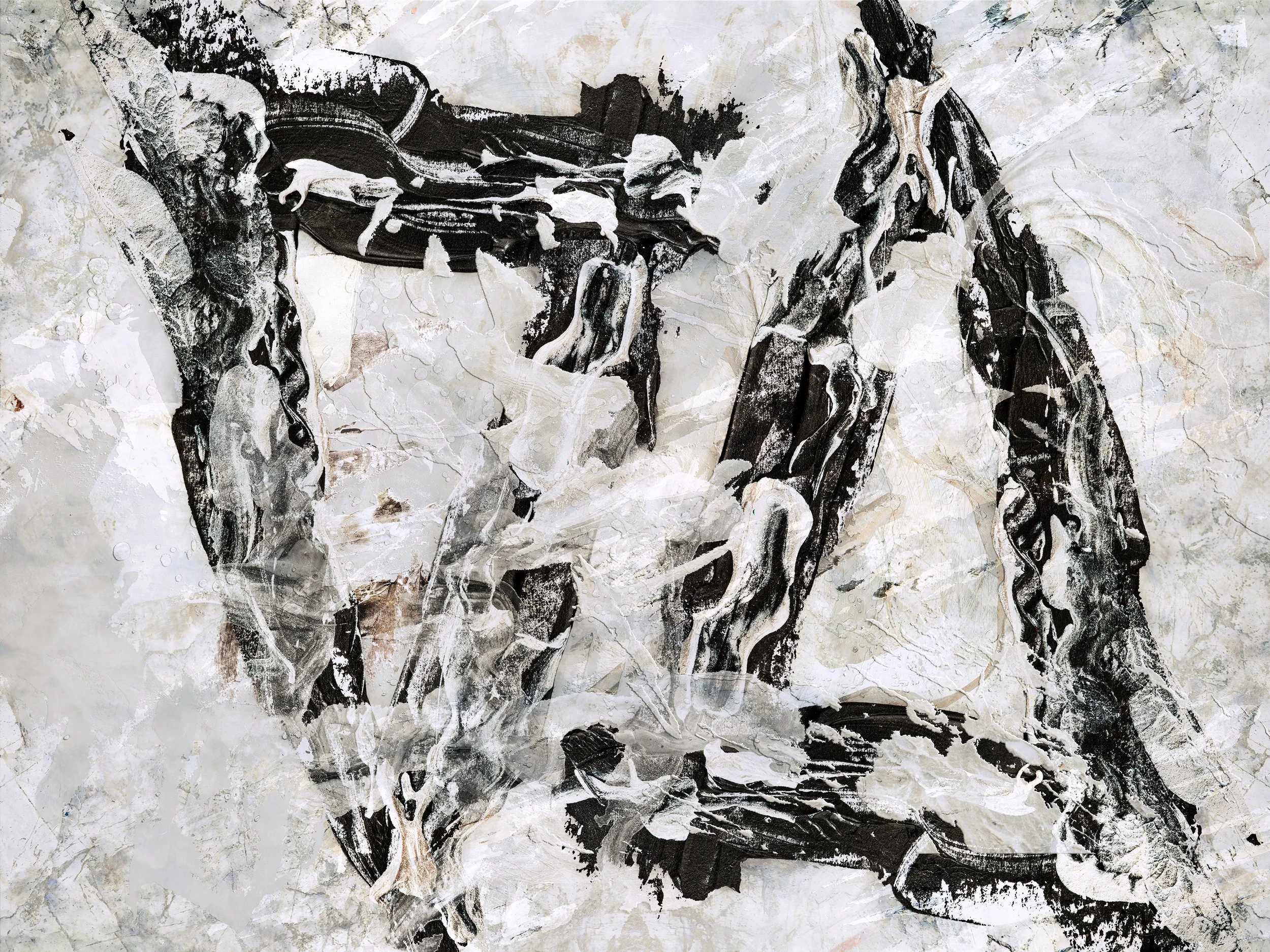
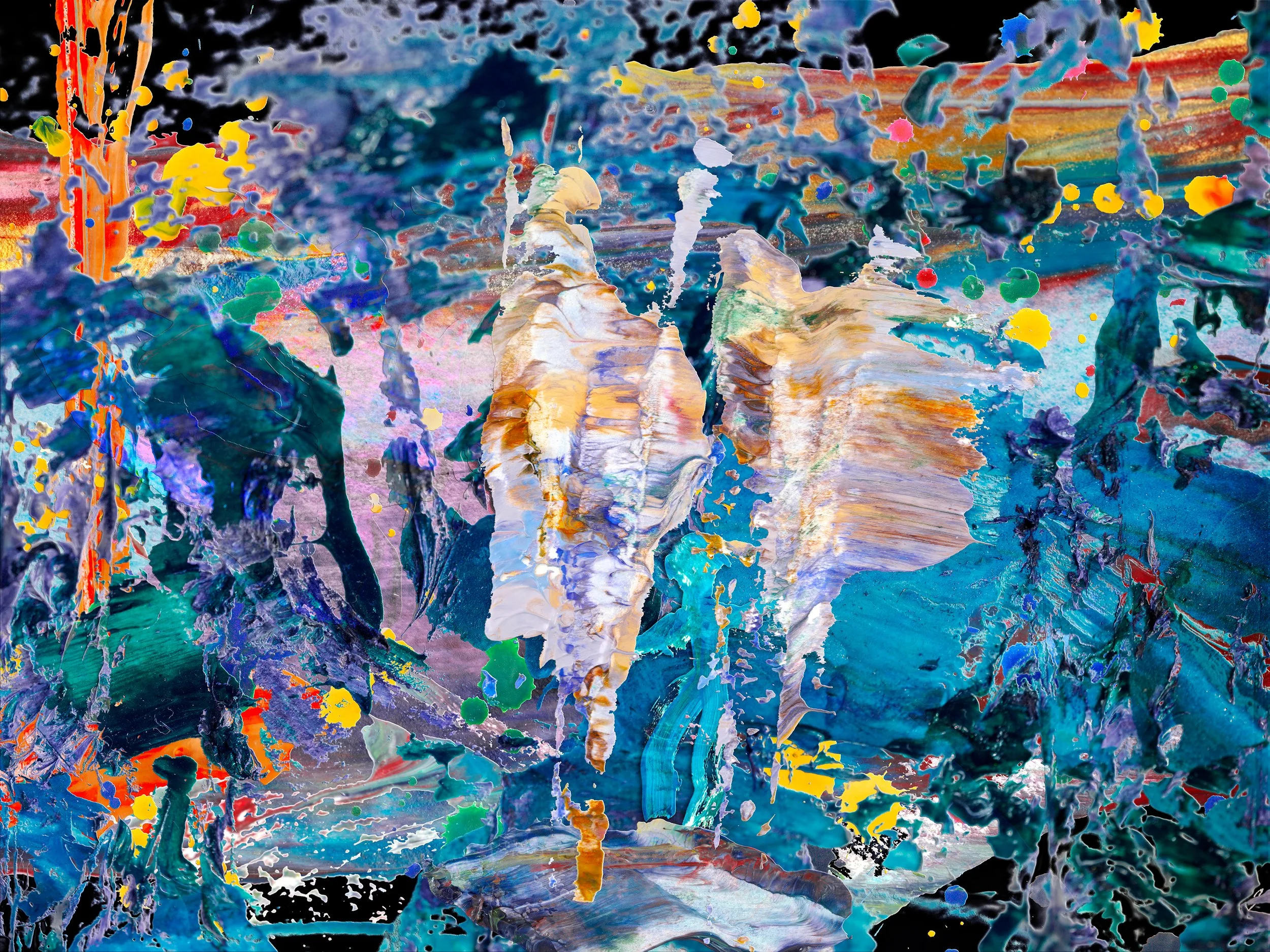
These works start as small physical paintings in the studio. They are not made to look finished. They are made quickly, physically, and instinctively, to catch raw colour, texture, pressure and accident before the image becomes too controlled.
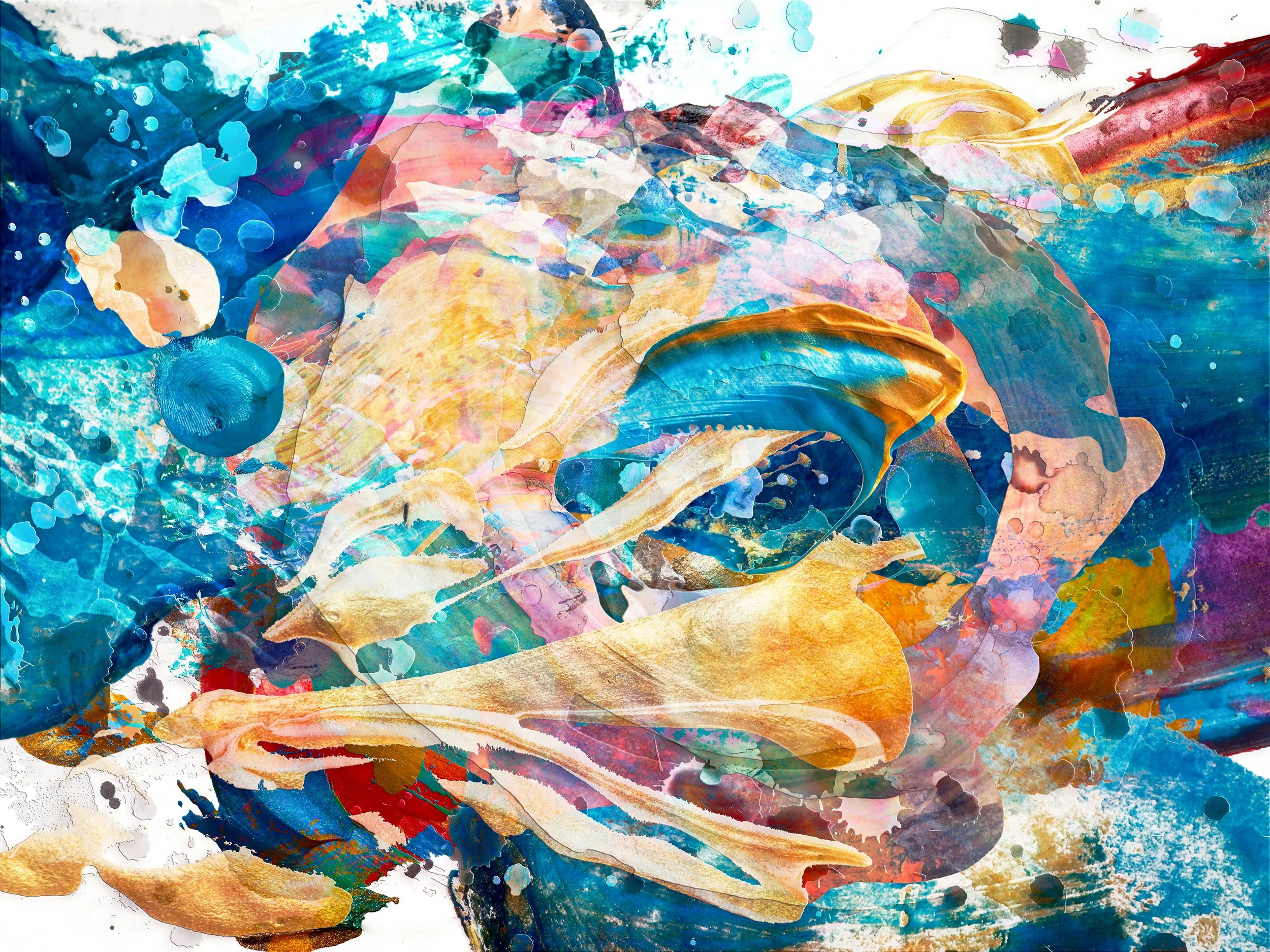
The painted layers are then photographed in extreme macro detail with a Hasselblad flagship camera and macro lens. A scrape of pigment can become architecture. A crack in the surface can become a landscape. A small collision of colour can open into something cinematic, cosmic or bodily.
From there, the material becomes the digital original.
Painting, photography and digital composition are brought together into one source image. The work is not digital replacing the physical. It is the physical world magnified, reorganised and given another life.
A Thing Before Language
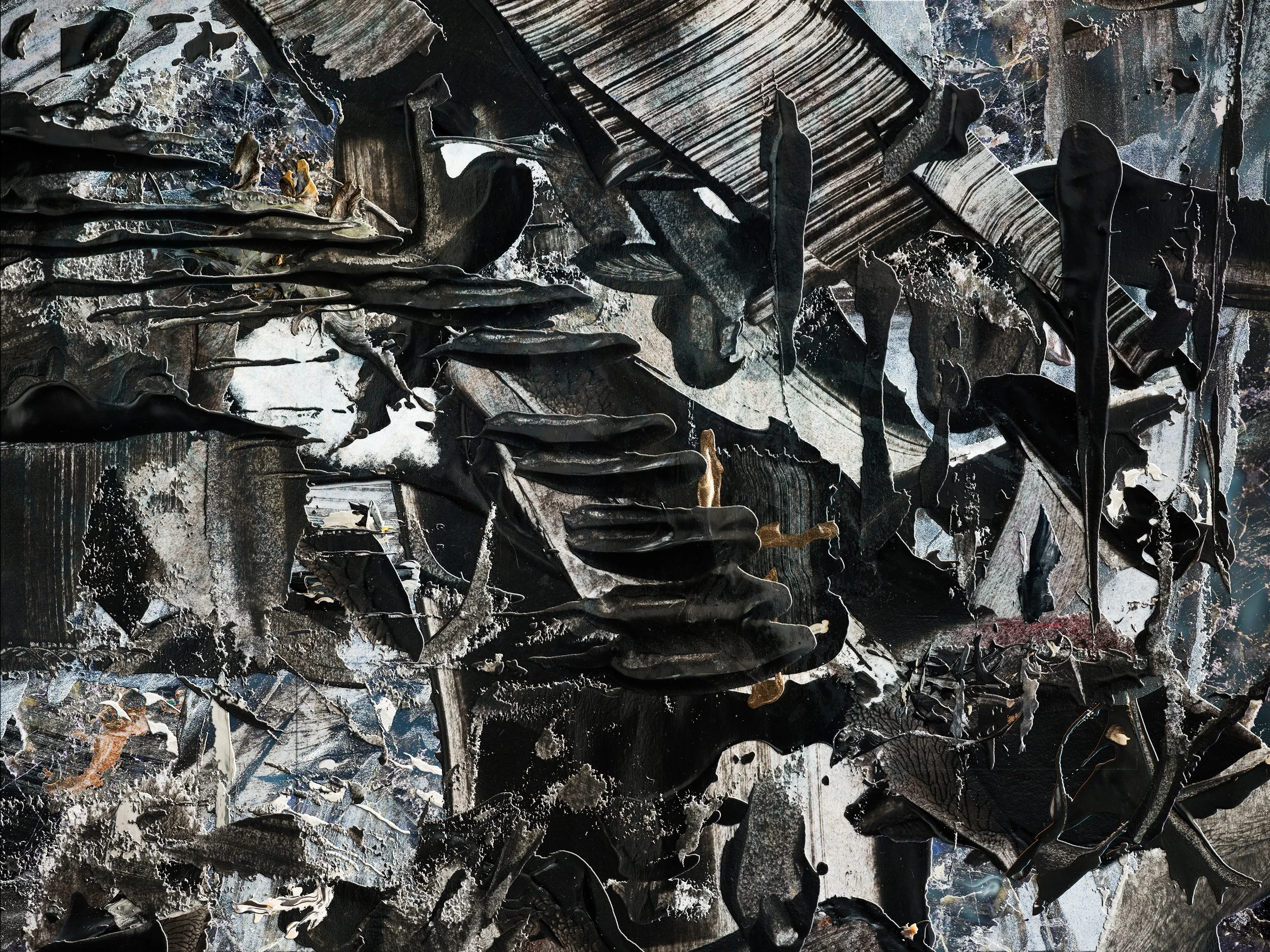
The darker works in the series feel difficult to name. They can suggest ruins, machines, fossils, alien structures, weather systems or landscapes from a film that was never made.
That uncertainty is part of the point.
They are not trying to be one thing.
They are places to enter.
Human Material in the Age of AI
This series is also a response to the moment we are in.
Images can now be generated instantly. That will open extraordinary possibilities, but it also makes the physical origin of a work matter again.
The hand matters.
The surface matters.
The mistake matters.
The time inside the studio matters.
These works use technology, but they do not begin in technology. They begin in material, touch, accident and attention.
From Image to World
The digital original is the source.
From that source, the work can become a wall-sized print, collector edition, car integration, animation, immersive room, architectural surface or future phygital environment.
A detail can become a world.
Hyperobjects is a series about what cannot be fully contained, but can still be felt.
Not a picture of the world.
A fragment of the larger thing we are already inside.